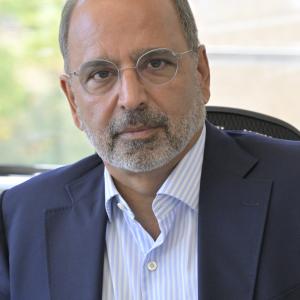
Statement by UN Humanitarian Coordinator Imran Riza at UN Noon Press Briefing on Lebanon
The statement of the UN Humanitarian Coordinator was delivered virtually at the UN Noon Press Briefing moderated by UN Deputy Spokesperson, Farhan Haq.
Good afternoon to all,
Let me start by noting that, here in Beirut, we woke up this morning to news of the ceasefire between the United States and Israel and Iran. This morning, there was uncertainty as to whether the ceasefire would apply to Lebanon – and we heard many voices calling for Lebanon’s inclusion. Developments today, however, would seem to indicate otherwise: an early morning airstrike at a café in Saida reportedly killed eight people; more than a dozen airstrikes were reported in the first half of the day, across southern Lebanon; and then, around 2:15 this afternoon local time, the IDF reported carrying out a wave of over 100 airstrikes.
The impact of these airstrikes is enormous. Although we have no firm figures yet, hundreds are believed to have been killed. Rescue operations continue. Hospitals across the country are calling for blood donations.
This morning, many people across Lebanon were cautiously optimistic about returning home – some even began to move. The events of the past hours, however, are likely to have triggered further displacement.
Ladies and gentlemen,
Since the start of this renewed escalation in early March, the human toll has risen at an alarming pace. According to the Ministry of Public Health, at least 1,530 people have been killed and 4,812 injured between 2 March and 7 April. This includes 130 children killed and 461 injured, and 102 women killed and 544 injured. These are not just numbers; they reflect a deepening civilian tragedy.
Displacement has reached an unprecedented scale. Over 1.1 million people—nearly one in five in Lebanon—are now displaced, exceeding 2024 levels in scale. More than 138,000 people are sheltering in 678 collective sites, many of them schools, with children making up around one-third. The vast majority—nearly one million people—are dispersed across host communities or informal settings, often with limited access to basic services.
Displacement is being driven by wide-ranging displacement orders now affecting 15.5 per cent of Lebanon’s territory, where more than a quarter (27.4%) of the population lived before the start of the current escalation. While many have fled, others remain trapped or unwilling to leave, fearing they may not be able to return.
This is placing immense pressure on communities already weakened by years of economic and political crisis, and the previous conflict. Repeated displacement is compounding trauma and increasing protection risks, particularly for children, women, older persons, and persons with disabilities.
Ladies and gentlemen,
Humanitarian access in southern Lebanon is facing severe and worsening constraints. A minimum of 106,000 people remaining south of the Litani River are increasingly isolated, limiting their access to essential services and humanitarian assistance. In western Bekaa, airstrikes have cut multiple roads between villages, further restricting connectivity to the area south of the Litani River.
Despite significant challenges, humanitarian partners remain committed to scaling operations wherever feasible.
Essential infrastructure and public services are increasingly under strain.
The health system is under severe pressure. Attacks on healthcare continue to rise, with more than 106 incidents reported, resulting in 57 deaths and 158 injuries among health workers. Many health facilities have been forced to close, while others are damaged or overwhelmed. At least 51 primary healthcare centres and six hospitals have closed, while many others have been damaged.
This is limiting access to life-saving assistance when it is needed most.
Education has also been significantly disrupted. Public schools and the national (Lebanese) university are being used as shelters, interrupting learning for thousands of students. Remote learning remains constrained by displacement, electricity shortages, and limited connectivity, raising serious concerns about long-term impacts on children, particularly girls and children with disabilities.
Despite these challenges, humanitarian partners—working closely with and under the leadership of the Government —are scaling up the response. Assistance is reaching people with food, water, shelter items, and fuel to sustain critical services. We have provided more than 4 million hot and cold meals, alongside over 130,000 blankets and 105,000 mattresses distributed in collective shelters, and multi-purpose cash assistance has reached around 100,000 displaced households outside shelters.
National partners and affected communities are at the heart of this response. Their leadership and local knowledge are essential to ensuring that assistance reaches those most in need quickly and effectively.
However, the response is under significant strain. Even before this escalation, partners aimed to support 1.5 million vulnerable people under the $1.6 billion Lebanon Response Plan. Today, we are scaling up with fewer resources, both financial and human, than in previous years, limiting both the speed and scale of assistance.
On 13 March, together with the Government and in the presence of the UN Chief, we launched a $308 million Flash Appeal to support up to one million people over three months [March-May]. To date, only 30.7 per cent (US$94.8M) of the required funding has been received. More support is urgently needed to sustain and scale up the response in line with rapidly growing needs, across four main groups: people displaced in shelters, those displaced outside shelters, host communities, and populations remaining in hard-to-reach areas.
Ladies and gentlemen,
Civilians continue to bear the heaviest burden of this conflict. So, let me conclude with three messages:
First, this escalation must stop. There is no military solution. De-escalation and dialogue are urgently needed to prevent further suffering.
Second, international humanitarian law must be respected. Civilians, civilian infrastructure, and humanitarian and medical personnel must be protected at all times. Swift and unimpeded humanitarian access must be facilitated.
Third, the humanitarian response must be fully supported. We need immediate and sustained financial and material support to meet rapidly growing needs.
Thank you.



Speech by
Goals we are supporting through this initiative