


Latest
Story
23 September 2026
How the UN Is Strengthening Local Institutions to Support Communities Across Lebanon in Times of Crisis
Learn more
Video
18 September 2026
Different Contexts. Common Aspirations: 10 Ambassadors. 10 Aspirations. 1 Lebanon.
Learn more
Video
17 September 2026
23 Ambassadors of Change Came With Ideas. They Left With a Commitment to Change.
Learn more
Latest
The Sustainable Development Goals in Lebanon
The Sustainable Development Goals are a global call to action to end poverty, protect the earth’s environment and climate, and ensure that people everywhere can enjoy peace and prosperity. These are the goals the UN is working on in Lebanon:
Publication
13 January 2026
Aid to Lebanon: Tracking of development aid received to Lebanon
The UN works with donor partners and national/international implementing partners in Lebanon to provide the government with real-time and transparent information on aid flows coming into Lebanon. These aid flows include development, humanitarian, peacebuilding and all other types of funds in support of Lebanon. Since 2016, the UN has collected reports on funding flows from Government donors to national entities, UN agencies, NGOs, Lebanon-specific funds and other actors and partners, including the private sector.This is done through cumulative quarterly updates on reported available funds (carry over and disbursed) and known future/expected commitments to Lebanon. The quarterly updates also present an overview of support by donors and available funds for the Lebanon Response Plan and Lebanon Flash Appeal. Check out the latest update on the reported allocated grants and future commitments: Aid tracking Results as of 30 September 2025.You can check the links below to view previous funding updates for Lebanon in 2017, 2018, 2019, 2020, 2021, 2022, 2023, and 2024.
1 of 5
Story
02 July 2026
Honor, Sacrifice and Commitment: Women Carve Out a Place in Lebanon’s Military and Security Forces
When Brig. Gen. Marwa Saoud first joined the Lebanese Armed Forces (LAF), she did not expect to one day have an emblem of a star and two swords on her shoulders, signifying a military grade that has traditionally been dominated by men. “Joining the army was a childhood dream I didn’t think would come true. But when the military institution opened its doors for women to apply as officers, I did,” she recalled. Brig. Gen. Saoud was among the first 32 women to be recruited into the Lebanese army in 1992 as specialized officers, preceded in 1990 by the first intake of female non-commissioned officers. After serving in different positions and departments, Brig Gen. Saoud now leads the army’s gender department and spends her days developing and implementing policies that promote gender mainstreaming throughout Lebanon’s military institution. Not far from Saoud’s office in the foothills of Mount Lebanon, Col. Diala Mohtar of the Internal Security Forces (ISF) recounts her surprise upon discovering that she and another friend would be the first two women to join Lebanon’s police force after they applied in 2001. “We read a vacancy announcement in the newspaper that said the ISF was recruiting specialized officers. There was no reference in it to the fact that the positions were exclusively for men, so we applied,” she said. And when they both passed physical and substantive entrance examinations with flying colors, they could not but be admitted. In addition to being an information technology specialist, Col. Mohtar now also serves as a gender focal point for the ISF. At the Directorate of General Security, the recruitment of women began earlier than in the army, in 1973, because of the entity’s “direct contact with citizens and civilians, including women and children, such as at the airport and border crossings,” explained Capt. Christiane Abou-Zeid, who is also a gender focal point at General Security. Women now represent just over 5 per cent of the LAF, 6 per cent of the ISF and 12 percent of the General Security forces. Lebanon’s army has long been a stalwart of stability and a trusted, non-denominational institution in a country which seeks to maintain coexistence in a diverse and vibrant ecosystem of confessions and societies. International attention on the role of the Lebanese Armed Forces, alongside Lebanon’s other security services, has ratcheted up in response to recent hostilities, which began with an exchange of fire between Hizbullah and the Israel Defense Forces along the Blue Line in October 2023 and have since reached almost all governorates of Lebanon. While headlines abound regarding the challenges facing the LAF in its efforts to advance a State monopoly on all arms in Lebanon – including welfare and capability deficits exacerbated by the country’s 2019 financial collapse – there are other stories to be told, including those of the women across Lebanon’s security sector, bucking trends and working, in their own ways, towards the country’s stability and evolution. Gender Champions and Trust Building Whether at the LAF, the ISF or General Security, the breakthrough for women has been attributed to strong leadership. In 2018, former LAF Commander Gen. Joseph Aoun, current President of the Republic, launched the recruitment of 4,000 female non-commissioned officers. Many of those who had previous specializations were given the opportunity to become officers a few years later in a separate cadet recruitment. Other “gender champions” within the military institution also supported women’s representation and empowerment as a “result of conviction and necessity”, according to army sources.Since the 1990s, women have proven their effectiveness in areas such as logistics, medical units and engineering. It later became imperative, according to the LAF leadership, to embed women in more operational situations to accompany developments all over Lebanon. This was piloted in a Land Border Regiment in North Lebanon. While not directly engaging in high-risk operations such as counter-smuggling or crackdowns on illegal cross-border activities, female soldiers within this regiment played an important role in the process of asserting state authority and building trust by supporting vulnerable populations and engaging in Civil-Military projects.“Women in the LAF have proven that their presence is not only symbolic but also effective,” said Brig. Gen. Saoud.Lt. Rosalia Hojaij of the LAF Military Policy further underscored the capabilities of women in the security sector. “Women can do all the functions that men do. They carry out inspections, raids, investigations, they collect forensic evidence, inspect crime scenes, and work in prisons and on tanks.” And, such duties are carried out with a deep sense of pride and belonging, according to many. “The most difficult decision I made was when I left my daughter to join the military academy to become an officer. I faced psychological and physical pressure. But I was not defeated and did not submit,” shared Lt. Josiane Habshi, who is currently the only female officer serving with the army’s Marine Commandos Regiment, leading a group of 30 female non-commissioned officers. “Most gratifying is the sense of pride I feel just being part of this institution, which lives up to its motto of Honor, Sacrifice and Loyalty,” she added. More Administrative, Less OperationalMaking the security sector more inclusive has necessitated change. Several steps have been taken, such as amending trainings that were causing women pelvic injuries or introducing women’s changing rooms. “When I gave birth to my first daughter, I was told I would get only four days of leave, which is what the male colleagues used to get for their paternity,” Col. Mohtar of the ISF, who now has four children, recalled, laughing. “Those rules have of course changed to align with national maternity standards of at least two months.” Several sources also attested that they are paid the same and believe that they have access to the opportunities available to their male counterparts. But in both the army and law enforcement forces, stereotypes persist, with some women arguing that there is more pressure on them to prove they deserve to be where they are. Moreover, with most women in Lebanon’s security sector working in administrative positions, it is clear that both institutional and societal barriers remain. According to senior sources within the military institution, boosting women’s representation in combat positions still needs time and effort, including to foster a conducive internal culture within male-dominated institutions, to create the necessary infrastructure for women serving in the field and to address a set of social challenges that go beyond the institution itself. “Not only are (women) able, they have mental capacity, leadership capacity, physical capacity to lead any unit. But the infrastructure and supra-structure we must create is not yet ready. It is not just about geography or about physical infrastructure, it is about the social system in Lebanon as a whole,” a senior LAF official assessed. Furthermore, women have yet to assume key decision-making positions, such as in the leadership of operational units. In terms of recruitment, advances are not always consistent, with institutions facing hiatuses related to financial or governance constraints. But, there are some bright spots: equal numbers of men and women graduated from the military academy in 2022 and 55 per cent of ISF recruits were women in 2025 – not sufficient to signify a trend but a solid foundation on which to build.“We are encouraging more women to apply, not just to administrative positions,” said Col. Mohtar of the ISF, noting that more women were being posted in different units, such as traffic police, judicial brigades or in prisons and stations across Lebanon. A More Strategic ApproachMore recently, the rationale behind advocating gender mainstreaming became more strategic, propelled forward by a progressive mindset in the command of the LAF, ISF and General Security, as well as support from the international community. United Nations Security Council resolution 1325 (2000), which created the Women, Peace and Security agenda, offered an important lever for the framing of gender equality and empowerment within the military and security institutions, particularly after a National Action Plan for its implementation was endorsed in Lebanon, recommending the increase of the number of women in military and security agencies and enhancing their roles within these institutions. Several countries have supported the LAF and other entities in those activities, including Canada, Norway, the United Kingdom, the United States and others, with technical support implemented, in many cases, through the United Nations, including UN Women. But the most important drivers of change came from within. “The establishment of the LAF gender department in 2022 was in itself an achievement, allowing for the inclusion of concepts of equality in developing military policies and trainings,” said Brig. Gen. Saoud.More recently some 85 gender focal points were designated across different LAF departments to help push forward policies to advance gender mainstreaming and inclusion. To make the process more operational, a gender strategy was also developed at the LAF and work is underway on an action plan to implement it. “We also recently endorsed the policy for Prevention, Response and Punishment of Sexual Harassment and Domestic Violence within the military institution in collaboration with the National Commission for Lebanese Women and UN Women and are now working on its action plan,” added Brig. Gen. Saoud. Similarly, Col. Mohtar said the ISF prioritizes the countering of Gender-based Violence, with a hotline for complaints now in place, in parallel to regular trainings and sensitization efforts delivered to the cybercrime bureau, human trafficking bureau and judiciary brigades. In turn, Capt. Abou-Zeid explained that, “At the General Security, we don’t have a Gender Department but we have a gender network with focal points in different centers in different cities, who report on any gender-related incidents, including any intimidation or harassment involving both General Security members and citizens.”. At the ISF, an internal gender audit and a gender action plan were finalized in 2024. Col. Mohtar noted that, subsequently, a report was developed to make recommendations to the senior leadership on addressing hurdles to gender mainstreaming and women’s equal representation in the short, medium and long term. Women are also gradually taking on more visible field positions, according to gender focal points. One woman was assigned head of a police station in Beirut and at the General Security, while several women are leading centers outside the Beirut headquarters. In addition, Capt. Abou-Zeid said, “Among the General Security units that carry out raids and inspections, there is one that is all female. When there are raids that require the presence of women, they are dispatched.” While there is still a long way to go, the achievements made so far have set the military and security institutions on a good trajectory to reinforcing women’s representation and integration. And, while questions abound regarding ongoing political efforts to halt hostilities in and around Lebanon, one thing is clear: women will be part of the solution.
1 of 5

Story
31 March 2026
Between Conflict and Uncertainty, the UN Works to Protect Civilians in Lebanon
From his desk in central Beirut, the United Nations’ top official in Lebanon – Imran Riza, UN Resident and Humanitarian Coordinator – could hear the escalation. Rather than leave, he and his team stayed at their posts, in the field and on the phones, ensuring aid reached civilians caught in the crosshairs of war."Over a million people are displaced and many unsheltered right now,” Riza said. “And I’m afraid we might be having a lot more.”The displacement orders typically come at night – posted online, then spread rapidly through WhatsApp, social media and word of mouth. Sometimes entire districts are told to leave shortly before the strikes hit.“It’s not just the south anymore,” Riza said. “Central Beirut has been targeted.”Nearly a fifth of the country has been displaced. Roughly 14 percent of Lebanon is under evacuation orders. Families move from place to place with little certainty about where they will land next. Many sleep along the seafront, while others refuse to leave altogether.Nearly a fifth of the country has been displaced. Roughly 14 percent of Lebanon is under evacuation orders.“They want to stay close to their homes because they’re concerned they won’t be able to return to them,” he said.A Country on the MoveThat fear is rooted in memories of past conflicts and returns that took years, if they came at all. Many residents worry that if the situation becomes entrenched, reversing it could be extremely difficult.Children bear the brunt. More than 400,000 children have been displaced in Lebanon, part of a regional crisis in which at least 87 children are forced from their homes daily.Across the country, 635 shelters have been opened, stretching a system already weakened by years of economic collapse. Education has been severely disrupted, as public schools and the national public university are now being used as collective shelters, interrupting learning for thousands of students whose futures grow more uncertain each day.At the same time, civilians are navigating a fractured information environment. Displacement orders circulate alongside official statements and various political messages. Mis- and disinformation runs throughout. For many, it is no longer clear who to trust or where safety lies.A Rare Political OpeningAnd yet, beneath the violence, something remarkable is taking shape: for the first time in decades, the Lebanese state is genuinely attempting to reclaim authority from Hezbollah.“The cabinet declared Hezbollah’s military wing unlawful,” said a senior Lebanese government official. “That’s a decision that has never been taken before.”Legislation banning the Iranian-backed group occurred just 24 hours before the war began. The move, paired with a government aligning more closely with the United States and Europe, signals a shift that would have been unthinkable even a year ago. It also follows the emergence of new leadership under the presidency of Joseph Aoun, determined to reassert state control after decades of parallel power structures.It also comes amid a rare geopolitical opening. The collapse of the Assad regime in Syria has disrupted the corridor that once funneled weapons and money from Tehran through Damascus into southern Lebanon.“Things have become more conducive to change,” the government official said.On paper, the conditions for state consolidation have improved. In reality, the window is narrowing.“They wanted us to deliver faster,” the government official said of Washington. “That’s not possible; this is a huge legacy to untangle.”That legacy includes Hezbollah’s entrenched power, a collapsed banking system and hollowed-out state infrastructure. The result is an impossible paradox: alignment with American objectives, without the ability to achieve them on the accelerated timeline expected.The UN’s Four Fronts From where Riza sits at the UN, he breaks the crisis down into four urgent concerns.First, de-escalation — “That doesn’t seem imminent,” he remarked, acknowledging the political will of all parties that a cessation of hostilities demands.The respect for international law and protection of civilians — “This is huge, the most important priority,” he said, as children and healthcare workers are killed at record numbers and medical facilities struck.Humanitarian access — increasingly fragile, dependent on coordination that does not always hold.“We need parties to the conflict to ensure our safe access,” Riza said. “Safe humanitarian access should be ensured under international law, because parties to the conflict are obligated not to target humanitarian sites.” He added, “That’s not always the case.”“We need parties to the conflict to ensure our safe access. That’s not always the case.”And funding.Following a visit by UN Secretary-General António Guterres on March 13, the UN launched a $308 million flash appeal for three months. Even that, Riza said, is unlikely to be enough.“We’re going to have to be revising upwards.”Meanwhile, along the southern border, UN peacekeepers continue to operate under growing strain. The mandate for UNIFIL is set to expire in December 2026, raising difficult questions about what happens next.Grounded by the PeopleStill, moments of reassurance cut through the chaos.Riza remembers meeting a displaced woman in a shelter.“She said, ‘Look at me. I’m wearing the same pajamas I had on when I fled here in the middle of the night… but I’m safe. I’ve got my family.’ And then she said, ‘What I want now from you is to help me with some cooking utensils so that I can cook for everyone here, because I’m a really good cook.”Riza offered his first genuine smile of the conversation when he added, “You see the strength of people.” A Message for WashingtonResilience, however, is not a strategy.As the same government official explained, Lebanon is attempting to unwind decades of dual power structures in a matter of months, while managing a war it does not control.“We are trying to reverse 45 years,” the government official said. “The expectations are enormous.”For Washington, the implications are equally significant.The U.S. now has a partner in Beirut more aligned with its objectives than at any point in recent memory. But alignment without capacity risks failure — and failure risks reinforcing the very actors the strategy is meant to weaken.From Beirut, that effort is already underway.And people like Imran Riza are there at that center of it, coordinating under fire to ensure civilians are protected. Disclaimer: This article was originally published by the Better World Campaign (BWC), written by Liz Metraux and BWC, and is republished here with permission.
1 of 5

Story
13 March 2026
‘Perfect storm’: Lebanon crisis deepens as civilians bear the brunt
The current escalation began on 2 March, when outgoing fire by Hezbollah drew a strong retaliation from Israel. Since then, the intensity of exchanges has increased, with heavier fire from Hezbollah and intensified attacks and some ground incursions from the Israeli side, leading to what Mr. Riza described as “full-blown humanitarian catastrophe”.815,000 uprootedA staggering 815,000 people have been uprooted by the violence in Lebanon since Israeli forces responded to Hezbollah rocket fire in the early days of the Middle East war, on 2 March, with airstrikes and mass evacuation orders.The rapid displacement reflects the scale of the crisis and its growing impact on civilians.“The toll on civilians is huge,” he said in an interview with Reem Abaza of UN News, pointing to the number of children among those killed. Eighty-three children were killed in the first week of the conflict, he said, with children accounting for about 20 per cent of overall fatalities, while women make up roughly 21 per cent. The numbers underscore what Mr. Riza described as a recurring pattern in modern conflicts, where civilians – and particularly children – are disproportionately affected.Displacement is also disrupting education across the country. Around 120,000 displaced people are staying in collective shelters, most of them set up in public schools. Classrooms have been turned into temporary living spaces, leaving many children without access to schooling.“Not only are children getting killed and displaced,” the senior official said, “but also children are not having the opportunity to have their right to education.”Struggling to rebuild livesOur interview with Mr. Riza was briefly interrupted by loud sound of explosions, after which he continued talking about his visits to shelters across Lebanon.Mr. Riza said he has heard similar stories from families forced to flee their homes within minutes after evacuation warnings covering large areas, including parts of southern Lebanon and Beirut’s southern suburbs.Many had only recently returned home after being displaced during the escalation in 2024 between Israel and Hezbollah and were trying to rebuild their lives.“One of the things that many have said is that they were just trying to struggle to rebuild their lives,” he said.Among those he met was a woman from Bint Jbeil who arrived at a shelter with her two children still wearing the pajamas they had on when they fled their home.“She said ‘thank you, we’ve got some blankets and mattresses’,” Mr. Riza recalled. “But, she asked if we could get clothes for her children and a frying pan so she could cook for the other people sharing the room in the shelter.”Women ‘holding families together’ Despite the hardship, he said women are playing a central role in helping families cope.“Women are the ones holding the families together,” he said, describing how many are organising evacuations and supporting children dealing with trauma.At the same time, the humanitarian response is becoming increasingly difficult. Mr. Riza said the current crisis is broader than the escalation seen in 2024, while Lebanon itself is in a weaker position.Funding cuts reduce resourcesGlobal humanitarian funding cuts have reduced available resources, and the strong regional support that helped during the previous crisis is understandably muted this time as countries deal with attacks from Iran, which Tehran says are targeting US bases. During the 2024 escalation, Gulf countries, including Saudi Arabia, Qatar, the United Arab Emirates, Kuwait, Oman and Bahrain, provided significant assistance. But now, those countries are themselves affected by the wider crisis and are not in a position to respond in the same way.“All of this together is frankly a perfect storm of unpredictable challenges,” he said.UN agencies are now repurposing existing funds to focus on lifesaving priorities and preparing a flash appeal, that will be launched on Friday, to mobilise additional support. The UN is also drawing on the Lebanon Humanitarian Fund and seeking emergency funding.Ceasefire is urgentStill, Mr. Riza stressed that humanitarian assistance alone cannot resolve the crisis.“What we need more than anything is a stop in the hostilities,” he said, emphasising that only a political and diplomatic process can end the suffering.Until then, he called for urgent international support, humanitarian access to affected communities and above all, respect for international humanitarian law.“Civilians are bearing the brunt,” Mr. Riza said. “They should not be the ones paying the price.” Disclaimer: This article was originally published by UN News and is republished here with permission.
1 of 5

Story
24 April 2026
Displaced women return home in Lebanon: "I saw destruction everywhere"
More than a million people were forced to flee their homes following the March 2026 escalation of conflict in Lebanon. Among them were an estimated 620,000 women and girls, around 1 in 4 women and girls across the country, including those from Lebanese, Palestinian, and Syrian communities. For many, this was, and continues to be, a recurring cycle of displacement.Despite a 10-day ceasefire announced on 16 April, conditions across Lebanon remain deeply challenging. Families continue to move between shelters and homes – the result of continued uncertainty and the fear of having to flee again. How is conflict impacting women and girls in Lebanon?At least 260 women have been reportedly killed and 1,150 injured in Lebanon between 2 March and 16 April 2026. As of 14 April, there have been 133 attacks on health care across the country. Even before the recent escalation, around 70,000 women in Lebanon needed maternal health services. Disruptions to health care, combined with displacement, have increased risks for women and girls, particularly those requiring urgent or ongoing care. A community kitchen supports displaced families and provides a sense of security to displaced womenThe Sibline Training Centre – supported by UNWRA – was set up in March to provide shelter to people who have been displaced. At the Centre, a community kitchen supported by UN Women prepares around 3,000 hot meals each day for families sheltering there. By early April, 48 women were employed on a short-term basis. The kitchen provides lifesaving support to displaced families, and a vital source of income and stability for those working within it. Repeated displacement and uncertain returns home for families in LebanonThirty-five-year-old Ghofran Abou Khalil was one of the women working in the kitchen. She had been displaced four times. The first within Syria, then to Tripoli, then to Borj al-Chemali camp in Lebanon, and then to Sibline.“My area was under threat of bombing. I had to leave at night, with my daughters. I forgot my medications, but I took my daughter’s favourite toy, a Panda. My husband thought it would be easier for shelters to accept women and children”, says Ghofran. Aside from the toy panda and the clothes they were wearing when they fled, Ghofran and her children struggled without additional clothing, heating, and basics like baby milk.When the ceasefire was announced on 16 April, Ghofran returned to her home and husband in the Borj al-Chemali camp. “It was hard to find a car to take me and my daughters back – we waited more than five hours. On the way, I cried a lot. I saw destruction everywhere – blood, people mourning their loved ones, others returning to ruined homes. I saw the bombed bridge in Qassmieh. It was mentally exhausting and left me deeply saddened”, says Ghofran. “The situation is still unclear, and I don’t feel safe, but it’s better than staying in a shelter. I also wanted to pick up clothes and essential items in case the escalation starts again”, she explains.Hadeel Moussa, 22, also fled the Borj al-Cemali camp in Southern Lebanon with her 11-month-old daughter. It was the second time she’d been displaced in the past two years. Her husband stayed behind. “I waited for hours in the street at 3:00 a.m. before finding a place on a bus”, she says. Like Ghofran, Hadeel has returned to the Borj al-Chemali camp. She shares the same fears the situation could escalate again and is keeping an emergency bag packed and ready. “The situation is still devastating but being at home feels better than living in a shelter”. Why displacement in Lebanon affects women and girls differently?Displacement puts the safety and well-being of women and girls at further risk and intensifies economic insecurity. Women and girls often also carry a greater share of responsibility for sustaining families, including caring for children and elderly, going without food so others can eat, and holding households together under huge strain. The kitchen has helped alleviate some of these pressures for women like Ghofran who described her job as “a string of hope” where she felt appreciated.Faten Ali’s journey follows the same pattern of movement between shelter and home, and loss. Faten’s brother was killed and her home destroyed during the 2024 conflict. After arriving in Sibline in March 2026, Faten, 39, joined the community kitchen. She described it as “one of the best things that happened” to her. “The laughter and friendships make things easier,” she says.Following the announcement of the ceasefire agreement, Faten travelled to the South to check on her home, which is still standing with minor damage. “This gave me hope”, she says. “But it is still not safe to stay in the southern villages, like for many other families, so we returned to the shelter”.Back at the shelter, she continues her work in the kitchen. The UN calls for the ceasefire agreement in Lebanon to be upheld to prevent further harm and ensure it delivers real protection for women and girls, and in full compliance with international humanitarian law.This means guaranteeing unimpeded humanitarian access, protecting civilians and aid workers, and ensuring that lifesaving, gender-responsive services reach those most affected. It also requires meaningful inclusion of women in peace and recovery efforts, alongside urgent investment in livelihoods, social protection, and services that address rising inequalities and caregiving burdens. Protecting civic space and preventing further militarization are critical to sustaining the ceasefire and avoiding renewed escalation, while increased, flexible funding must support gender-responsive recovery and strengthen the resilience of women, their families and communities across Lebanon.
1 of 5

Story
23 September 2026
How the UN Is Strengthening Local Institutions to Support Communities Across Lebanon in Times of Crisis
When people think of emergency response, they often think of aid trucks, warehouses or distribution centres. Few would think of a specialized school for students with disabilities.Yet across Lebanon, local institutions are demonstrating that facilities built to support children and communities every day can also become vital frontline responders during times of crisis.Schools, specialized education centres and vocational training institutions are not only places of learning and inclusion, but they are also becoming part of a broader shock-responsive model, capable of adapting quickly to changing humanitarian needs while continuing to support children and vulnerable communities over the long term.In Saida, southern Lebanon, a centre that once helped provide nutritious meals to students with disabilities is now serving a very different purpose. Months into the conflict, the facility has transformed into a community kitchen serving families displaced by the recent escalation of hostilities. The meals are prepared by students from the centre's Vocational Training Unit, including some with learning disabilities and others who had previously left school, working alongside vulnerable members of the local community. Together, they are gaining practical experience while helping support families affected by the crisis.This approach reflects the vision behind Lebanon's national school meals programme, implemented by the Ministry of Education and Higher Education (MEHE) together with the World Food Programme (WFP) and UNICEF. By investing in local institutions, the programme is strengthening systems that support children's nutrition and learning during stable periods, while creating the flexibility to respond rapidly during emergencies.During stable periods the kitchen supports children’s nutrition and education through school meals programme. During emergencies it can rapidly shift providing assistance to displaced families and vulnerable communities. As the humanitarian crisis deepens, community institutions across Lebanon are adapting to support families affected by conflict and displacement. The centre in Saida is one example of how investments made long before the crisis is helping communities res0pond when they are needed most.Across the country, schools have become an important part of Lebanon's humanitarian response. More than one million people were forced to flee their homes during the war in Lebanon. As of 15 September, about 340,000 people remained displaced, including over 15,000 sheltering in collective centres, most of them public schools and educational facilities across the country.The centre is one of four Specialized Schools for Children with Disabilities participating in Lebanon's national school meals programme, implemented by MEHE in partnership with WFP and UNICEF.Before the escalation of the conflict (in March 2026), the centre's kitchen prepared meals for students with disabilities attending classes each day. Through the school meals programme, children received nutritious meals that supported their health, wellbeing and ability to learn.Today, that same kitchen is serving a different purpose. It now prepares meals for families displaced by conflict and vulnerable members of the surrounding community—a powerful example of how investments in local institutions can continue serving communities in different ways over time.Through UNICEF-supported cash-for-work activities, implemented with local partners, members of the surrounding community are also working in the kitchen...For the centre's staff and leadership, the transformation has been both rapid and necessary.Abdallah (17, Displaced) says: We were living in the Beirut suburbs, and when the war started, we had to leave our home and move to a TVET school that was turned into a shelter. When I arrived, I was eager to join the kitchen initiative set up at the TVET school. It gave me the opportunity to learn cooking skills, earn income, and help prepare daily meals for displaced families and children. I feel more productive now, and I’m able to support myself and others. What is happening in Saida is not unique. Across Lebanon, other local institutions are also adapting to support communities, demonstrating how investments in education infrastructure can continue delivering value far beyond their original purpose.WFP and UNICEF, under the leadership of the Government, have worked with Technical and Vocational Education and Training (TVET) institutions to rehabilitate and equip professional kitchen facilities, strengthening local food preparation capacity and creating opportunities for skills development and community engagement. Today, some of these kitchens are serving a different purpose.As displaced families seek refuge in TVET centres and other facilities, WFP is supporting the preparation of both hot and cold meals that enable displaced people and vulnerable community members to cook and serve food for those sheltering there.The approach not only helps provide food assistance but also creates opportunities for people affected by the crisis to contribute directly to the response while earning an income.Together, the OPD centres and TVET kitchens illustrate how Lebanon's school meals programme is evolving beyond traditional school feeding. By strengthening local institutions before crisis strikes, the programme is creating a more flexible system capable of supporting children during the school year, responding to emergencies when needed, and returning to its core education mission as communities recover.These local initiatives form part of the UN’s broader emergency response across Lebanon, delivered under the leadership of the Government of Lebanon and in close coordination with humanitarian partners. Since the escalation began in March, WFP has rapidly scaled up its response to support families affected by conflict and displacement. Working closely with the Government of Lebanon and humanitarian partners, WFP has provided emergency food and cash assistance to hundreds of thousands of vulnerable people, including families sheltering in schools and other displacement sites. The organization has delivered hot meals, food parcels and cash assistance, while also helping maintain critical supply chains and logistics services that enable humanitarian assistance to reach communities across the country.The continued adaptation of these facilities would not be possible without the strong partnership between the Government of Lebanon, the Ministry of Education and Higher Education, WFP, UNICEF, schools, caregivers, communities and local partners working together to support children and families during times of stability and crisis alike.The UN extends thanks to the donors supporting the emergency response in Lebanon, whose contributions are helping vulnerable families access food and other essential assistance as humanitarian needs continue to grow.
1 of 5

Story
16 September 2026
"Give Us the Chance to Try": Lebanon's Youth Are Not Waiting for Change
“Give a young person a real problem, a limited budget, three months and the freedom to experiment,” says Julia Assi, a university student from South Lebanon and one of 23 newly selected Ambassadors of Change in the UN Global Compact Network Lebanon’s SDG Brain Lab. “Lebanon does not need thousands of perfect successes. It needs thousands of young people to have the opportunity to test thousands of ideas.”It is a simple ask, and a demanding one. This August, as Lebanon marked International Youth Day, that ask sat at the center of two UN initiatives designed to do exactly what young people like Julia are calling for: create space for youth not just to be heard, but to act.Still Here. Still Building.The first was a digital campaign built around a single idea: despite years of economic hardship, conflicts, displacement and uncertainty, young people across Lebanon are still here, and still building. Under the hashtag #StillHereStillBuilding, more than 25 young women and men from across Lebanon recorded short videos sharing what keeps them going, their motivations, their hopes for Lebanon, the ways they are already contributing to their communities amid the subsequent crises. The digital campaign was launched with video messages by the United Nations Resident and Humanitarian Coordinator Imran Riza and Lebanon's Minister of Youth and Sports, Dr. Nora Bayrakdarian. Riza’s message to young people was direct: "Determination alone is not enough. Young people need opportunities: quality education, decent jobs, safe spaces and a real voice in shaping their future." Minister Bayrakdarian, in turn, called on young people to keep dreaming, innovating and volunteering, describing “youth not only as Lebanon's future but as a driving force shaping its present.” (Check her video message here).The digital campaign quickly gained traction across UN Lebanon's social media platforms, generating a total reach of 610,000 and significantly increasing engagement with the hashtag around International Youth Day, observed on 12 August. The campaign also reached a wider public audience through state-owned Télé Liban's morning show “A7la Saba7” (Best Morning), where UN Youth Taskforce Co-Chair Abeer Abi Zaki spoke about the campaign and the young people behind it.What came through in the videos was not a single message, but a shared thread: young people describing hope, resilience and a determination to keep contributing to Lebanon's future, on their own terms. [Here are selected videos by Youth joining the UN Lebanon #StillHereStillBuilding Campaign: Video by "Hadis Chabeb"; Video by Maroun Abi Zeid and Video by Zahraa Bazzi.] From Ideas to ActionThat same spirit carried into a second initiative a few days later: one designed to move beyond messaging and into dialogue. On 20 August, UN Lebanon and the UN Global Compact Network Lebanon brought together 23 newly selected SDG Brain Lab Ambassadors of Change for a half-day event at UN House, built around a 45-minute conversation with the UN Resident and Humanitarian Coordinator himself. The premise was straightforward: rather than a briefing or induction session, the Ambassadors would set the agenda. Their reflections on what it actually takes to move an idea into action in Lebanon today would shape everything that followed. Over the next year, as part of their assigned mandate, they will design and implement community initiatives that advance recovery and development efforts, bring change to their own communities, support the local implementation of the 2030 Agenda, and embed sustainability in the environments in which they live.At the heart of this mandate is the belief that meaningful change is built through collective action. As Deenah Fakhoury puts it: “Change rarely comes from one person doing everything. It comes when many people decide to do something.” It is this spirit of shared responsibility that the Ambassadors are expected to carry into their communities, turning individual actions into collective progress. An Honest Conversation about What It Takes to Create ChangeThe dialogue did not shy away from the obstacles young people face and the difficulty of achieving the aspired change. Zeina, one of the Ambassadors, described the barriers young people face bluntly: for many, simply "securing a decent life" through work, tuition fees, and transportation costs leaves little room to pursue an idea. She herself works two jobs and cancelled three work commitments to attend the UN-GCNL dialogue. Legal and logistical hurdles, she added, often feel like repeatedly "hitting a wall." Others pushed back against the instinct to expect instant results. Change takes patience, said Hanine Faraj, “young people sometimes need to "plant the seeds" before results follow.” And where change does need to happen quickly, several Ambassadors argued it has to be structural: "long-term change cannot depend exclusively on trust and goodwill," said George Daou, calling for sustainability and youth participation to be embedded in law and regulation, not left to voluntary effort. Across the conversation, a common thread emerged: young people in Lebanon are not short on ideas or motivation. What they lack is space, time, resources, institutional trust, to act on them. The RC/HC's role in the dialogue was less to answer than to listen and probe further, returning repeatedly to one idea: that “hope, even in difficult circumstances, is what keeps both young people and institutions working toward a shared future, and that reinforcing it matters for Lebanon's social cohesion as much as for its recovery.” From Conversation to CommitmentThe dialogue did not end in discussion alone. Each Ambassador was invited to complete a personal pledge: "I'm still here. Still building. Still committed to…", submitted through a Digital Pledge Wall and carried forward as a personal commitment for their one-year mandate. One Ambassador committed to mental health awareness in her community, pointing to persistent stigma in rural areas and the belief that "there is no health without mental health." Others pledged around themes ranging from environmental action to community leadership, each one a starting point for the initiatives Ambassadors will now design and implement over the coming year as part of their mandate. Building, TogetherTwo youth-centered initiatives, one message: young people in Lebanon are not waiting for change to come. They already know what stands in its way, what would unlock it, and where they believe they can make the biggest difference themselves.What the "Still Here. Still Building" campaign and the Ambassadors of Change dialogue show isn't that these young people needed convincing to act. It's that once given a genuine space to speak, and to be heard by those with the power to respond, they were ready to turn that space into commitment, and commitment into action.None of this makes the challenges any easier, or suggests resilience alone is enough. It shows something simpler: young people are here, they have ideas, and they're ready to act when given trust, partnerships and opportunities to do so.As Lebanon looks toward recovery, meaningful youth participation means more than listening. It means creating pathways for young people's ideas to be tested, their voices to be heard, and their leadership to shape what comes next.For the 23 Ambassadors of Change, that next chapter is already underway: a one-year journey from dialogue, to commitment, to action. Watch a wrap-up video of the event hosting the 23 Ambassadors of Change, produced by UNSCOL public information assistant Hala Feghaly:
1 of 5

Story
14 September 2026
Beyond the Rubble: Lebanese Women Safeguarding Memory and Heritage
When Rima Sharara had to leave Bint Jbeil in southern Lebanon during the 2026 war, she had little space in her car to carry belongings. But among the few things she made sure to take were the computer and hard drives of the Bint Jbeil Public Library. They contained years of photographs, records, and documentation of the library’s cultural and community activities, as well as an oral history archive preserving stories from across the region.“The archive was a priority,” says Rima, who has managed the library since 2004. “Clothes can be replaced, but this is the history of the library. If I had left it behind, fifty years from now someone could have come and said: there was never a library here.”Today, the library has been completely destroyed by the war. Thousands of books, equipment, and a physical space that had served generations of residents have been lost. But part of its history survived because Rima carried it with her.Among the material she saved are 24 oral history recordings from 24 towns and villages in Bint Jbeil district. Collected from older women and men, with women playing an important role in documenting and preserving them, the recordings capture local stories, songs, and experiences passed down through generations, helping preserve the collective heritage of the area.“Stone can be destroyed, but they cannot erase our memory,” says Rima. “Saving these materials is an act of cultural resistance and a way of protecting our history.” A library that became part of the communityThe Bint Jbeil Public Library was established in 2001, as communities in southern Lebanon were rebuilding their lives following the end of the Israeli occupation in 2000.Wafaa Sharara was 21 when she joined the team that established it. “The library was like a child to me,” she says. “We established it and raised it, and every time I saw it growing and succeeding, I saw part of myself in it.”Over the years, the library grew to house around 15,000 catalogued books, alongside thousands more awaiting classification, including old and rare books in Arabic, French, and English, encyclopaedias, documents, periodicals, and cultural collections.It also grew beyond a place to borrow books into a community space serving Bint Jbeil and surrounding towns and villages. Its development was supported by neighbouring municipalities, members of the Bint Jbeil diaspora, and a number of local and international partners, including the United Nations Interim Force in Lebanon (UNIFIL), which provided in-kind support, helped organize activities, and regularly participated in library events.“A public library is one of the few places in a community that truly belongs to everyone. It provides free access to knowledge and information, but also something equally valuable: a shared space where generations and people of different backgrounds can come together,” says Ghassan Salamé, Minister of Culture. “That is why the destruction of a library is never simply the destruction of a building: it is the loss of a place of learning, encounter and collective memory. In communities marked by conflict and displacement, preserving these spaces and what they represent is essential to maintaining the bonds that allow a community to endure and rebuild.” Students from a diversity of backgrounds came to study and conduct research, children participated in storytelling and cultural activities, and women joined dialogue sessions, skills training, and psychosocial support activities. Most importantly, the library created a space for people to connect. “It was a meeting place for everyone,” says Wafaa. “Christians and Muslims, students, teachers, women, readers, and artists, all came together in one place.”For women, these connections also extended across villages. “Women from different villages met through the activities and got to know one another,” says Rima. “It was a place that brought women together.”Over time, these encounters created friendships and networks that extended beyond the library, strengthening mutual support, trust, and social cohesion across communities facing repeated conflict and displacement. From participation to women’s leadershipBuilding on the role that public libraries play in communities, UN Women, through the Women’s Peace and Humanitarian Fund (WPHF), partnered with ASSABIL to establish and support Women’s Committees linked to public libraries. Drawing on ASSABIL’s strong community presence and experience in creating inclusive civic spaces, the initiative has provided women with a sustained platform to identify priorities in their communities, organize locally led activities, and respond to emerging needs. In doing so, it has helped strengthen women’s voice and leadership in community response, social cohesion, and peacebuilding, while reinforcing public libraries as spaces for participation, connection, and collective action.In Bint Jbeil, the Women’s Committee brings together six women with different skills, experiences, and community networks. This diversity helps them understand the realities facing women in Bint Jbeil and surrounding villages, identify needs, and shape locally grounded responses.“Investing in women and in the community spaces they know and trust means investing in the relationships and local knowledge that communities rely on, particularly in times of crisis,” says Gielan Elmessiri, UN Women Representative in Lebanon. “When women have the space and resources to lead, they can respond to local needs, strengthen connections, and help communities recover and rebuild together.” For Wafaa, joining the Committee meant returning to the institution she had helped create. “I felt that I was returning to the place where I started, having gained experience that I can now invest in serving the library and the local community."As displacement, economic hardship, and uncertainty placed growing pressure on families, this local knowledge became even more important.“When you help women manage the pressures they are living through, you help reduce the tension that can affect the family, the neighbour, and the people around them,” Wafaa explains. “No one understands a woman like another woman.”Their work reflects a central principle of the Women, Peace and Security agenda: women affected by conflict are not only recipients of assistance, but leaders with the knowledge, networks, and experience to identify needs, ease tensions, strengthen relationships, and contribute to locally led recovery. A trusted space in times of crisisFollowing the 2024 war, the library showed how quickly a trusted community institution could support recovery. After people began returning to Bint Jbeil, its equipment was repaired, electricity and internet access were restored, and the library reopened in less than a week. Teachers and students came to connect to online classes when these services remained unavailable in many homes.When Rima announced the reopening, the response stayed with her.“More than one hundred people commented,” she recalls. “They told us, ‘You came back before everyone else. You gave us hope.’”Reopening the library had become a sign that community life could begin again.The 2026 conflict has now taken away that physical space. Its destruction represents more than the loss of books and a building. It has also taken away a place where women participated in community life, relationships were built across villages, and people came together during difficult times.“Women in Bint Jbeil and the South have lost an important part of themselves,” says Rima. “The library contributed to their identity, through reading, empowerment, developing skills, or simply by being a place they could come to.” Yet not everything was lost.The Women’s Committee remains. The relationships built through years of community work remain. And the archive Rima carried out of Bint Jbeil remains.Preserving this collective memory is part of recovery. Rebuilding after conflict is not only about restoring walls, shelves, and books, but also about preserving a community’s history, relationships, and identity. Women like Rima, who have documented, protected, and carried this memory through repeated crises, play an important role in keeping it alive for future generations.“Meeting Rima and hearing her story made clear the leading role women play in preserving the memories, relationships, and sense of belonging that hold communities together,” says Imran Riza, United Nations Resident and Humanitarian Coordinator in Lebanon. “In the face of destruction, they are protecting identity, strengthening social cohesion and helping shape recovery and peace in their own communities.”After the 2006 war, Rima remembers saying: “We will return like a flame that does not go out.”Years later, and after the library’s destruction, she still holds on to that belief.“People can always rebuild what has been destroyed,” she says.
1 of 5

Story
19 August 2026
From shared meals to shared trust: Women finding common ground in times of crisis
The recent crisis in Lebanon displaced thousands of families, placing immense pressure on both displaced and host communities in Saida and surrounding areas. In response, a women-led community kitchen, managed by Mouvement Social and supported by UN Women through the Women's Peace and Humanitarian Fund (WPHF), was established to address the humanitarian needs of crisis-affected families while bringing together women from displaced and host communities. "When we were displaced from the far south, everything changed," says Fatima Dakik, who fled her home with her family to Saida during the crisis. With her father unable to work because of health problems, Fatima suddenly found herself responsible for helping her parents while adjusting to life away from home.When she heard about the community kitchen in Hlaliyeh – a municipality of Sidon in Lebanon – she saw more than an opportunity to earn an income. "I wanted to be part of something that could support people," she says. "I was able to support my family while doing something meaningful for others."Each morning, Fatima joined the other women to prepare and package hundreds of hot meals for displaced families and vulnerable households. As the days passed, the kitchen became more than a workplace. "Maybe the war separated us, but this kitchen brought us together," she recalls. "At first, we were formal with each other. Then we became like sisters."Working alongside women from diverse communities challenged many of the assumptions she had carried. "Before, we didn't really know each other," she says. "But when we worked together, we realised our worries were the same. We all wanted to live with dignity and peace."Beyond the humanitarian needs, the large-scale displacement also placed pressure on host communities and, in some areas, revived long-standing sectarian tensions and grievances between different groups in Lebanon. By bringing together women from displaced and host communities to work towards a shared purpose, the community kitchen created a space for daily interaction, helping to build trust and strengthen relationships at a time when communities needed them most.For Fatima Kashouri, who was displaced from Nabatieh with her family, the kitchen offered something she had not expected: a sense of belonging.In the early days, everyone arrived carrying different and challenging experiences of loss and uncertainty. But the routine of working together – starting the day with coffee, preparing meals, and sharing stories as they worked – gradually brought the women closer.One conversation, in particular, has stayed with her. "One of the women was talking about the home she had lost during the conflict. Suddenly, we realised several of us had lived through the same experience. We cried together for a while, then went back to preparing the meals," she recalls. "That was when I understood that shared pain can also bring people together."Over time, colleagues became friends. They celebrated birthdays, checked in on one another when someone was ill, and stayed in touch even after work. Looking back, Fatima believes these everyday connections can have a lasting impact beyond the kitchen. "This is how initiatives like this begin – with ordinary people," she says. "When we build a relationship with someone who is different from us, I think we take away a little bit of the fear." Heba Hamadeh, who was displaced from the village of Toul, still remembers the day one of the women had to leave work to attend divorce proceedings. Without hesitation, everyone stepped in to cover her tasks. "No one even thought twice," Heba recalls. "We simply helped each other. That's what made this place special."For Heba, moments like these gradually changed the way the women saw one another. "When you work together every day, you discover that what you have in common is much greater than what separates you," she says. "Understanding each other reduces fear far more than keeping our distance ever could."Looking back, Heba believes the experience demonstrated that peace begins long before formal dialogue. "It starts in everyday life," she says. "When you work together, solve problems together, and share the same experience, trust grows naturally and fear begins to fade."While community kitchens are often viewed primarily as food security interventions, UN Women has intentionally integrated peacebuilding and social cohesion into this work since 2024. By creating spaces where women from different backgrounds work side by side toward a shared purpose, these initiatives foster trust, strengthen relationships across communities, and demonstrate how everyday collaboration can contribute to social cohesion while meeting urgent humanitarian needs. When families displaced from Nabatieh sought refuge in her home, Sahar Ramadan witnessed the crisis from a different perspective. Living in Saida, she welcomed displaced relatives into her house before later joining the community kitchen, where she found another way to support families affected by the conflict. "I felt it was a chance to be part of something meaningful and help people during a difficult time," she says.For Sahar, the kitchen gave women a meaningful way to support their communities during one of the most difficult periods of the crisis. "Each of us came carrying our own worries," she says. "But when we worked together, we focused on helping others. That gave us strength too."Looking back, she says it wasn't only the meals they prepared that brought the women together. "When women from different communities work together every day, something beautiful happens," she says. "You laugh together, you share the hard days together, and little by little you understand each other better."For Sahar, the experience also reaffirmed the vital role women play in helping families and communities navigate times of crisis. "Even when women are carrying their own burdens, they continue supporting their families and the people around them," she says. "They try to ease someone else's hardship and give people a reason to hold on to hope. That's what I saw every day in the kitchen." Today, many of the women continue to participate in women-led community initiatives and peacebuilding activities, carrying forward the relationships they built in the kitchen. What began as a humanitarian response has become a foundation for stronger community ties, demonstrating how everyday acts of solidarity can help rebuild trust in times of crisis.The initiative was implemented by Mouvement Social with support from UN Women through the Women's Peace and Humanitarian Fund (WPHF), funded by the German Embassy in Lebanon.
1 of 5

Story
18 May 2026
Life in displacement remains a struggle as Lebanon ceasefire brings little respite
A line of laundry, swaying gently in the heat of early spring, hangs where a classroom whiteboard once stood. Instead of desks, there are rows of mattresses. Through thin partitions, voices carry from one family’s space to another – multiple lives have been compressed into this one room in Raml El Zarif Public School in Hamra, Beirut.Nearly a month after a fragile ceasefire was announced, this is still what displacement looks like in Lebanon: not an emergency that has passed, but one that continues, quietly, unevenly, and without resolution. Around 130,000 of the more than 1 million people who have been forced to flee their homes are staying in collective shelters, the majority of which are schools.“We fled Dahieh and were displaced here,” says Qassem Reda, recalling how his family escaped heavy airstrikes in Beirut’s southern suburbs. Like many others, their journey to safety was rushed and uncertain. Some families spent days on the road; others arrived with nothing but the winter clothes they were wearing.When the ceasefire was announced, there was a surge of hope. Many families attempted to return, or at least tried to check on their homes. But those efforts were often short-lived. “We went back for one day,” says Ghadir Houjaj, who fled from the south. “But we didn’t feel the situation was stable enough to stay. There is so much destruction, and the sound of airstrikes and drones overhead was too much… so we came back here.”It is a pattern that repeats itself across Lebanon: cautious returns followed by renewed displacement. Even after the ceasefire, insecurity, unexploded ordnance and widespread destruction have prevented people from going home. Tens of thousands of houses have been damaged or destroyed, while access to water, electricity, health care and schools remains limited or disrupted. While Beirut has been quieter in recent days, areas in southern Lebanon and West Bekaa continue to endure near-daily Israeli airstrikes, demolitions and destruction, affecting homes and civilian infrastructure and making return difficult, dangerous or impossible.For people like Yusuf Qbeissi from Nabatieh, going home in the near future is not an option. A retired army serviceman who spent years building his house, he returned to find it severely damaged. “I put my life’s savings into it less than five years ago,” he says. “Now all the walls are cracked. I can’t risk my family’s lives by moving back. And repairing the house will cost money I do not have.”He is now staying at a school in the north, spending his days tending small patches of land in the schoolyard, growing thyme and rosemary, in an effort to reclaim a sense of purpose amid the uncertainty. It has been almost 2.5 months since the latest military escalation began. Life inside collective shelters, like the converted classroom in Raml El Zarif school, is characterized by overcrowding and a lack of privacy, with schools never built to host hundreds of families. Life here is a world of contrasts: babies are born next to people who are mourning loved ones killed in the conflict.Many have had to move repeatedly in recent weeks. Some, including Syrian refugees who first fled their home country 14 years ago to seek safety in Lebanon, say they have lost count entirely. “Not enough fingers,” says a woman trying to recall how often she has been displaced.Support from UNHCR and partners, including the installation of partitions and repairs in hundreds of shelters, has helped restore some dignity. “There is a huge difference now,” says Ghadir. “Less noise, more privacy. We can even host relatives who are also displaced.” But these improvements do not change the reality that people are unable to return to the privacy of their own homes. As temperatures rise, heat and poor ventilation are also becoming urgent concerns. Many families are also without a source of income. Maha, 48, from Srifa in the south, lost both her home and her husband’s welding workshop in airstrikes. “We have nothing left,” she says. “There are many sick people [here], many needs. Life is very hard and there is no work.” Her daughter now works in the shelter’s kitchen to help the family survive.The psychological toll is especially visible among children. “When I enter my classroom in my school [at home], I go to study,” says Zahraa, 12. “Here, I enter the classroom to sleep and live away from home because it is not safe to go back.” She is sheltering in another classroom, in Al Basta Public School, which is just a 15-minute drive from her home. But their neighbourhood in Beirut has taken a pounding, too. “There is no electricity, no water, no internet for her online schooling,” says her mother, Fatima. “I feel like I can’t breathe. I miss our home.”In another classroom, a group of women sit in a circle during a support session, sharing fears and practising breathing exercises to cope with stress and trauma. For many, these sessions are the only place where they can speak openly. Sitting nearby, Nawal chooses not to join. “I prefer to keep my stories in my heart,” she says quietly, holding her phone. This story was written by Ms. Dalal Harb, Communications Officer & Spokesperon at UNHCR Office in Lebanon.
1 of 5

Press Release
04 August 2026
Statement on the Anniversary of the 4 August 2020 Beirut Port Explosion
Six years after the devastating Beirut Port explosion, time has not erased the pain of those whose lives were irrevocably changed in a matter of seconds, nor has it diminished the urgency of securing justice. Mr. Jean Arnault, Officer-in-Charge of the Office of the United Nations Special Coordinator for Lebanon (UNSCOL), expresses his unwavering solidarity with all those affected and pays tribute to their relentless pursuit of truth, justice, and accountability.Mr. Arnault stresses that a disaster of this magnitude cannot become an abandoned chapter in history. Rather, efforts must be redoubled to advance the judicial proceedings and bring them to a conclusive outcome. To this end, he calls on all relevant actors to take the necessary steps to facilitate swift progress in the case.“Despite the more recent security and humanitarian challenges facing Lebanon, the silent suffering of thousands who were directly or indirectly affected by this tragedy remains profound. Justice delayed is justice denied, and the right of victims, survivors, and all the people of Lebanon to accountability must be upheld without further delay,” he says. The Beirut Port explosion is a tragic reminder of broader institutional vulnerabilities. An impartial, independent and transparent judicial process is essential to breaking the cycle of impunity, restoring public trust, and upholding the rule of law. In this context, Mr. Arnault underscores the importance of advancing structural reforms to strengthen and safeguard the independence of the judiciary as a cornerstone of effective state-building and Lebanon’s reform agenda. On this somber occasion, the United Nations stands firmly alongside the people of Lebanon and affirms that the path towards genuine national recovery and the extension of the State’s authority is inextricably linked to the attainment of justice.
1 of 5
Press Release
01 August 2026
Statement of Jean Arnault, UNSCOL Officer-in-Charge, on the Occasion of Lebanon’s Army Day
As Lebanon strives to fulfill its national and international obligations, very high expectations fall on the Lebanese army, not least in advancing security and stability across the country, ensuring Lebanese territorial integrity and driving the implementation of United Nations Security Council resolution 1701 forward. “It is truly remarkable how the Lebanese army has succeeded in gaining the trust of the Lebanese people across communities and performing its daunting tasks in spite of a challenging operational environment and socio-economic difficulties,” Mr. Arnault stated. Both the achievements and challenges were showcased during a visit that Mr. Arnault carried out yesterday to the Lebanese army’s third land border regiment in eastern Lebanon, where he met with LAF personnel and toured a border post and watchtower. He reiterated the UN commitment to the mobilization of international support for the LAF. Reflecting on the positive perception of the LAF shared by the most diverse communities, including during his recent field visits across Lebanon, Mr. Arnault added:“Leadership, empathy and transparency are what people see in their army, and it is an inspiration for efforts to extend state authority throughout the country.”
1 of 5
Press Release
07 July 2026
One in three private sector workers surveyed in Lebanon no longer working amid renewed hostilities, ILO report finds
The report, “Lebanon’s labour market in crisis: Assessing the impacts of renewed conflict and regional instability – A focus on private sector workers”, is part of the ILO’s response to the latest escalation of hostilities in Lebanon. It provides timely worker-level evidence to inform measures that protect jobs, income, labour rights and livelihoods as part of the wider crisis response and recovery support effort. The survey, conducted in May 2026 in partnership with the General Confederation of Lebanese Workers (CGTL) and the Federation of Employees’ and Workers’ Unions in Lebanon (FENASOL), covered 2,485 private sector workers who were employed before the resumption of conflict in March 2026. It targeted both employees and self-employed workers across sectors and governorates. The findings show that 33.0 per cent of surveyed workers were no longer working at the time of the survey, including 28.2 per cent who were unemployed and 4.7 per cent who had exited the labour force. Job losses were particularly severe among workers from hostilities-affected districts in southern Lebanon, reaching 76.5 per cent among residents of the Nabatieh Governorate and 43.2 per cent among residents of the South Lebanon Governorate. Yet the impact was not confined to frontline areas, with workers in other districts also affected by weakened demand, reduced business activity, inflationary pressures and wider market disruptions. Displacement emerged as a major driver of job loss. More than two-thirds of workers who remained displaced were out of work. Among surveyed workers, 37.4 per cent were still displaced at the time of the survey and an additional 14.2 per cent had been displaced during the conflict but had later returned home. “The current crisis in Lebanon is not only destroying buildings and infrastructure, but also destroying jobs, incomes and the fragile foundations of many people’s lives,” said Ruba Jaradat, ILO Regional Director for Arab States. “The ILO is working with its constituents and partners to support labour market recovery in Lebanon. That means protecting workers, supporting income and employment, strengthening social protection, producing reliable and timely data and analysis, helping enterprises retain workers, and ensuring that the most vulnerable are not pushed further into informality, poverty or exclusion. Humanitarian assistance saves lives, but decent work and social protection help people preserve dignity, rebuild livelihoods and recover.” The report finds that the crisis has disproportionately affected workers already facing higher vulnerability. Joblessness was particularly high among persons with disabilities, at 71.4 per cent, women at 44.3 per cent, youth aged 15–24 at 42.4 per cent, Syrian refugees at 39.4 per cent and employees in informal jobs at 37.7 per cent. Workers without written contracts, those with lower levels of education and those employed by smaller enterprises were also more likely to lose their jobs. The consequences of the crisis extended well beyond job loss. Among workers who remained employed, average labour income fell by 14.8 per cent, while total average labour income across the surveyed population is estimated to have fallen by 40.4 per cent once the complete loss of earnings among those who lost their jobs is included. Workers who found new jobs often did so under worse conditions, earning on average 30.7 per cent less than before, with most entering informal employment or self-employment. Households relied heavily on their own resources to cope. Savings were the most common coping mechanism, while more than 40 per cent of Lebanese, Syrian and Palestinian workers reported delaying loan or bill repayments. Many also reduced food spending, underscoring growing pressure on household welfare and food security. Recovery needs remain substantial. Nearly half of respondents, 45.5 per cent, identified assistance in finding stable employment as their primary need, while 37.7 per cent said they needed support to secure higher or more regular earnings. The report calls for a response that combines immediate humanitarian and labour market measures with longer-term investment in employment creation, social protection, skills development, enterprise recovery and decent work. The report recommends employment-intensive recovery programmes, targeted wage subsidies, emergency support for women, persons with disabilities, self-employed workers and micro, small and medium-sized enterprises, expanded social protection, legal support for migrant domestic workers and strengthened labour market governance. In the medium and longer term, it calls for stronger labour market data systems, activation of the National Employment Office, local economic development approaches, skills and vocational training, gradual formalization, unemployment protection and a comprehensive national employment policy. The report was prepared by the ILO Regional Office for Arab States in partnership with CGTL and FENASOL, with co-funding from the ILO’s ENABLE programme, funded by the European Union, and the PROSPECTS partnership, funded by the Government of the Netherlands. For more information or to request media interviews, please contact: kanaana@ilo.org and abouantoun@ilo.org
1 of 5
Press Release
30 June 2026
ILO holds first National Tripartite Dialogue in Lebanon on employment protection, enterprise recovery and economic resilience
The dialogue forms part of the ILO’s response to the impact of the latest escalation on Lebanon’s labour market and economy. It aimed to explore practical pathways for economic recovery, employment protection, livelihoods preservation and enterprise continuity, for the benefit of Lebanon and its tripartite labour market constituents: government, employers and workers.Participants discussed the impact of the crisis on enterprises and workers, including business disruption, job losses, declining incomes, the expansion of informal work, social protection gaps, and constraints affecting enterprises’ access to finance, energy and markets. They also discussed the public policy orientations and practical measures required to support enterprise recovery and workers’ protection, preserve jobs and livelihoods, expand social protection, safeguard rights at work, increase reliance on Lebanese companies and local suppliers in response and recovery activities, and strengthen linkages between humanitarian action and economic recovery.H.E. Minister of Labour Dr Mohammad Haidar emphasized that protecting workers and supporting enterprises are two interconnected priorities at this critical stage. “Preserving jobs, safeguarding rights and facilitating the continuity of production are the basis of any sustainable economic and social recovery. The Ministry of Labour reaffirms its commitment to strengthening dialogue with employers, workers and international partners to develop realistic national solutions that protect Lebanese people and support the resilience of the economy,” he said. Imran Riza, United Nations Resident and Humanitarian Coordinator for Lebanon, stressed that the current crisis requires protecting people, livelihoods and national systems together. “Civilians, workers and frontline responders need protection. Families need income, and enterprises need continuity. Recovery does not begin only after the crisis ends; it also begins by protecting livelihoods and the systems that people depend on today,” he said. Ruba Jaradat, ILO Regional Director for the Arab States, said: “Lebanon has important assets for recovery: an experienced workforce, a private sector capable of initiative, and social partners ready to work together. The ILO will continue to support Lebanon and its tripartite constituents through evidence and analysis, social protection support, skills and employment programmes, and enterprise support, helping to protect jobs, restore incomes and turn crisis response into a more inclusive and sustainable recovery pathway.” Social partners underlined that workers’ protection and enterprise sustainability must go hand in hand in any recovery process.Salim Zeenni, President of the Association of Lebanese Industrialists, said: “Economic recovery begins by enabling enterprises to continue operating, producing and retaining their workers. The Lebanese private sector is facing major challenges, yet it still has the capacity to create jobs and support recovery if provided with a stable environment, accessible finance, energy, markets and measures that facilitate business and production. This dialogue is important because it links workers’ protection and enterprise sustainability as two mutually reinforcing conditions for economic recovery.”Dr Bechara Al-Asmar, President of the General Confederation of Lebanese Workers, said: “The crisis is placing severe pressure on workers and their families through declining incomes, irregular wage payments, job losses and the expansion of informal work. What is needed today is to protect fundamental rights at work, strengthen social protection and prevent workers from bearing the cost of the crisis alone. Tripartite dialogue provides an essential space to agree on measures that preserve workers’ dignity and support labour market stability.”Castro Abdallah, President of the National Federation of Worker and Employee Trade Unions in Lebanon, said: “There can be no real recovery without protecting the workers most affected, including informal workers, displaced workers, migrant workers and vulnerable groups. Practical measures are needed to ensure income, safety at work, the right to organize and bargain collectively, and to prevent exploitation, child labour and forced labour. Any recovery pathway must be fair, inclusive and place workers at its centre.”
1 of 5
Press Release
29 May 2026
Civilians Bear the Brunt of Escalating Hostilities and Displacement Orders in Lebanon: Statement by the United Nations Humanitarian Coordinator for Lebanon, Imran Riza
I am deeply alarmed by the intensification of hostilities and by the impact of displacement orders affecting communities across Lebanon, including in Tyre, Nabatieh, and other locations south of the Zahrani River.The vast scale and unclarity of displacement orders are creating disproportionate panic and distress, pushing countless families to make impossible choices in their search for safety.There have been shocking reports that airstrikes have harmed civilians as they attempted to leave areas under displacement orders. Ongoing hostilities have reportedly hindered efforts by first responders to assist the injured, including people trapped under rubble in the aftermath of Israeli airstrikes.The human costs are immense. According to the Ministry of Public Health, at least 31 people including women and children were killed and 40 injured in hostilities on 26 May alone. This includes 14 people who were reportedly killed in a single airstrike in Borj El Chmali near the city of Tyre. In the past week, 15 children have been killed and 62 injured.Health workers are facing death and injury on a horrific scale. Since 2 March, 182 attacks have resulted in 125 health care personnel killed and 311 injured, according to the WHO surveillance system for attacks on health care (SSA).International humanitarian law is clear. The protection of civilians, including health workers and first responders, must be ensured.The ceasefire announcement raised hopes for a return to normal life. However, instead of families going home, the displacement of civilians continues unabated.Men, women, and children continue to flee their homes for safety. Shelters are now overflowing. Schools continue to be displacement sites, robbing children from their right to education. It is distressing to see the unique historical heritage of Lebanon, including Tyre, a UNESCO World Heritage Site and a site inscribed under enhanced protection, being threatened by the hostilities.One week ago, I was in Tyre meeting with displaced people in a collective shelter. Some families told me they had been forced to move five times in the last two years.Their wishes were crystal clear: de-escalation, a true stop to hostilities, the possibility of rebuilding their lives, and hope for the futures of their children. ENDFor more information, please contact the United Nations Office for the Coordination of Humanitarian Affairs in Lebanon:Ms. Kristen Knutson, Head of Office - OCHA. E-mail: Knutson@un.org
1 of 5
Latest Resources
1 / 11



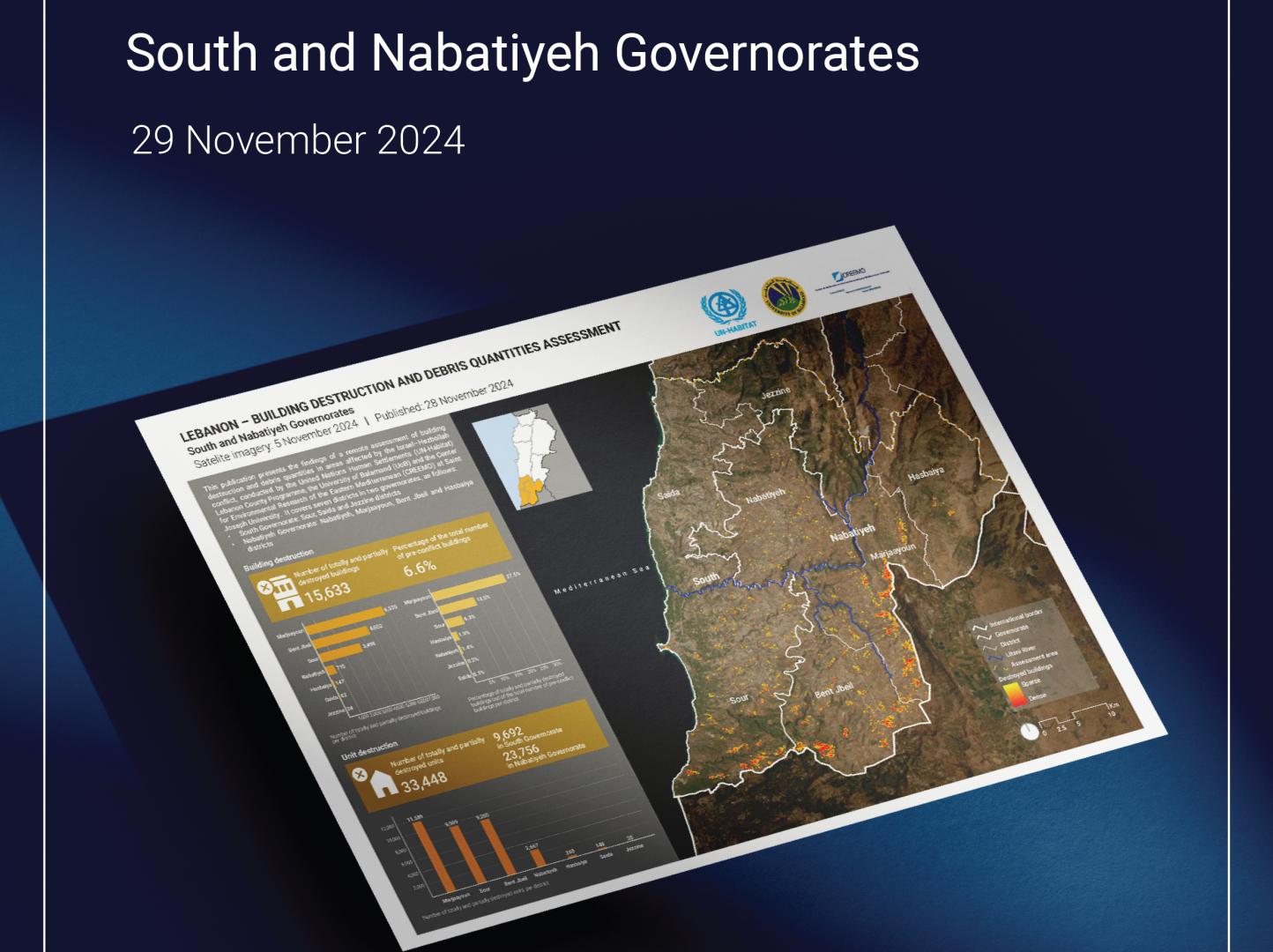
Resources
29 November 2024
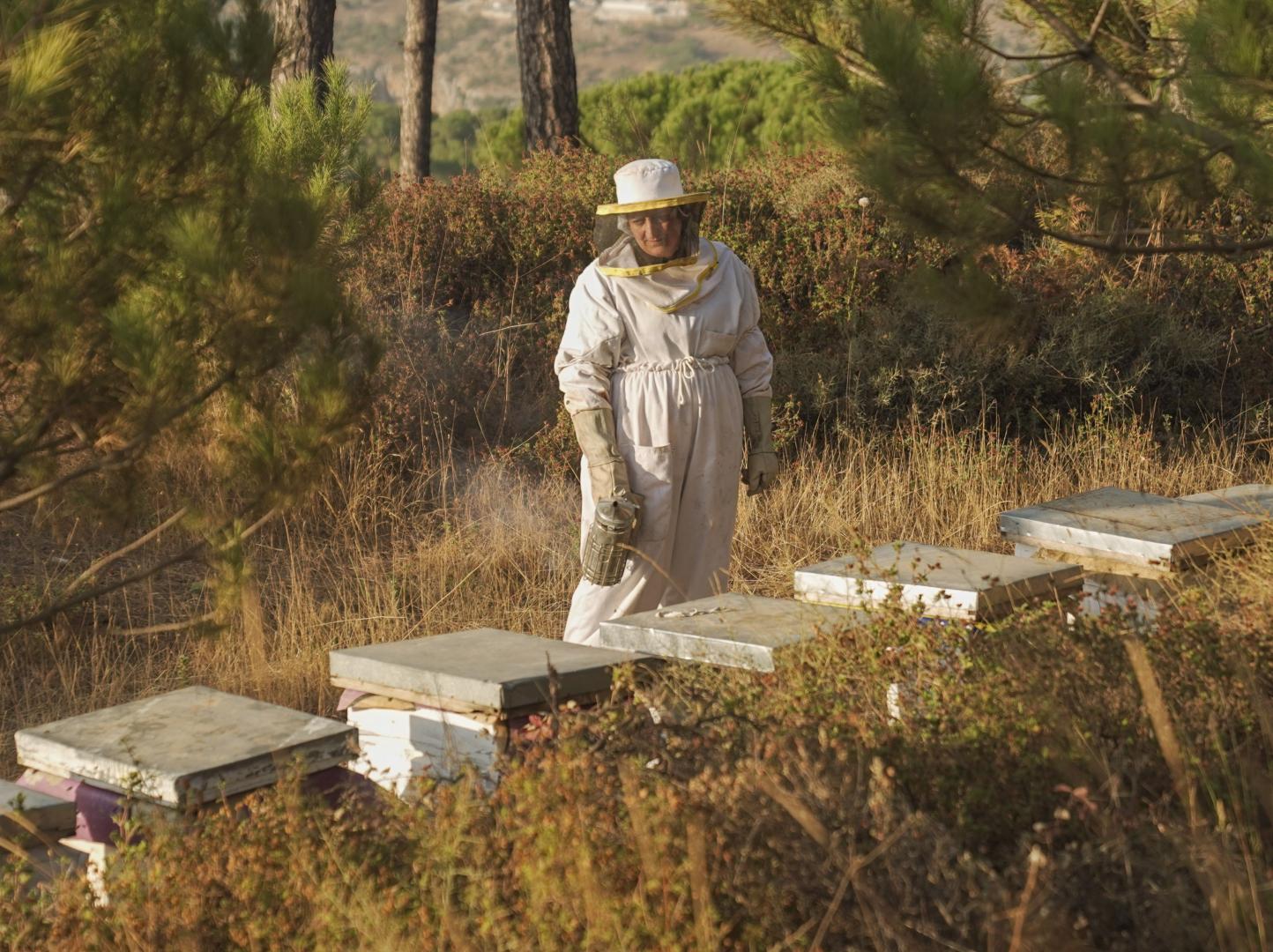

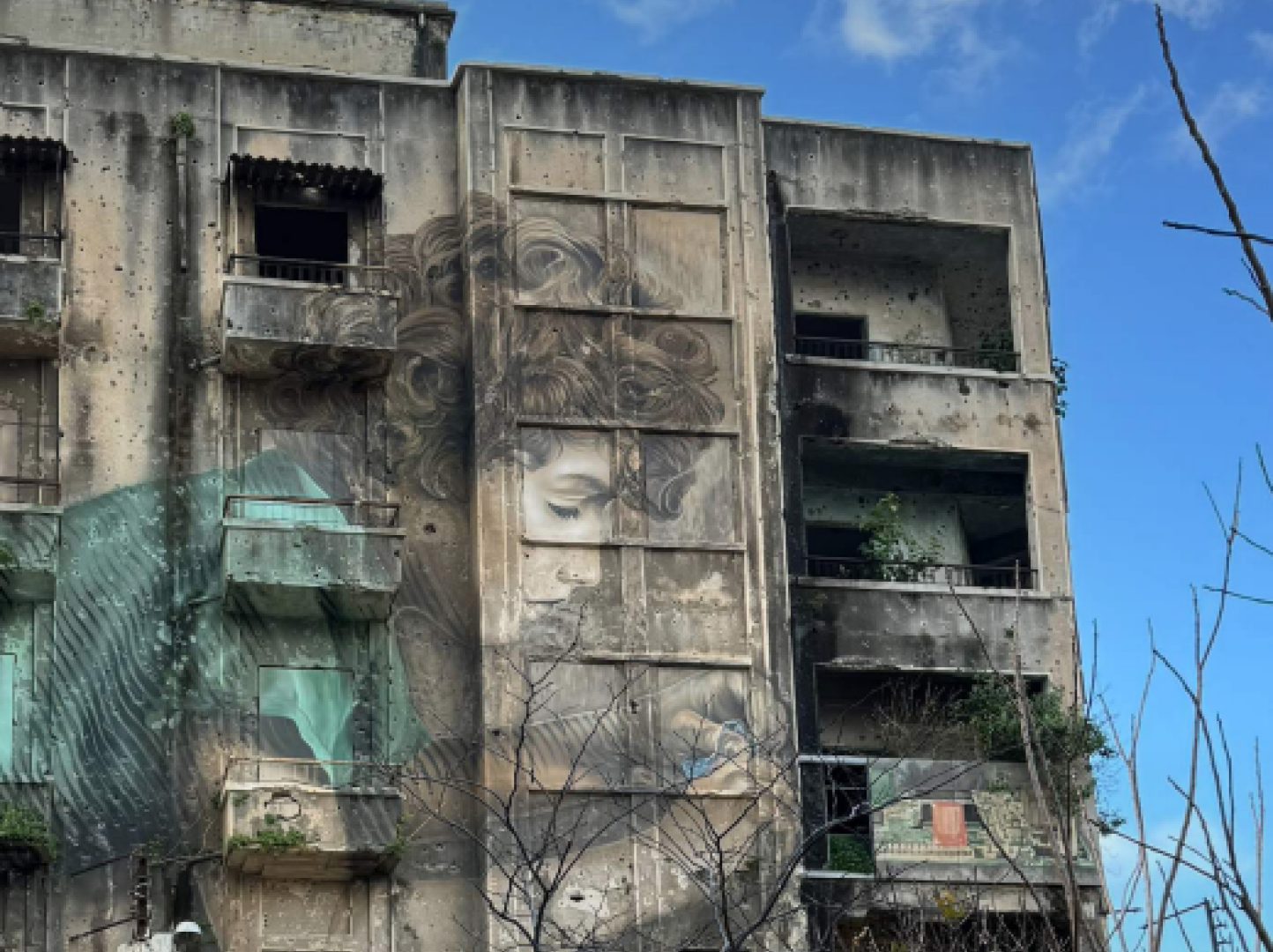
1 / 11